
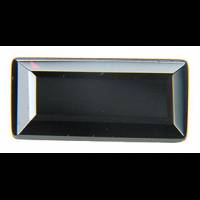
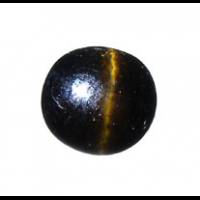
Rutile Gemstones by Colour
This table shows the variety of hues this gemstone can be found in. Click on a photo for more information.
 |
Rutile Gemstones by Size
This table shows distribution of Rutile gemstone sizes that are listed on this site. This can give a good indication as to the general availability of this gemstone in different sizes.
Contributed photos
Lightest:0.96 cts
Heaviest:1.56 cts
Average:1.16 cts
Total photos:3
Do you have a larger Rutile? Why not upload a photo?
| General Information | ||||||||||||||||
|---|---|---|---|---|---|---|---|---|---|---|---|---|---|---|---|---|
| Chemical Formula |
| |||||||||||||||
| Rutile Treatments | ||||||||||||||||
| Pale yellow, synthetic rutile may be turned an attractive blue color by heating at over 1000°C in a reducing atmosphere. Heating at 1000°C in oxygen reverses this change (Nassau, 1980) - Nassau (1984) | ||||||||||||||||
| Synthetic Rutile | ||||||||||||||||
| Synthetic rutile: Colourless, yellowish, Transparent; Hardness 6 - 6.5; RI 2.616 - 2.903; Birefringence 0.287; Uniaxial/+; SG 4.26; Inclusions: occasionally gas bubbles - Gemmological Tables, Ulrich Henn and Claudio C. Milisenda, 2004, p 31 | ||||||||||||||||
| Physical Properties of Rutile | ||||||||||||||||
| Mohs Hardness | 6 to 6.5, Blue Chart Gem Identification (2010) More from other references | |||||||||||||||
| Specific Gravity | 4.20 to 4.30, Blue Chart Gem Identification (2010) More from other references | |||||||||||||||
| Cleavage Quality | Distinct, Gemmological Tables (2004) | |||||||||||||||
| Optical Properties of Rutile | ||||||||||||||||
| Refractive Index | 2.609 to 2.903, Blue Chart Gem Identification (2010) More from other references | |||||||||||||||
| Optical Character | Uniaxial/+, Blue Chart Gem Identification (2010) More from other references | |||||||||||||||
| Birefringence | 0.287, Blue Chart Gem Identification (2010) DoublingMore from other references | |||||||||||||||
| Dispersion | Very high, Blue Chart Gem Identification (2010) | |||||||||||||||
| Chatoyancy | Yes, star 4, Blue Chart Gem Identification (2010) | |||||||||||||||
| Colour | ||||||||||||||||
| Colour (General) | (Dark) yellowish brown, reddish brown, black, Blue Chart Gem Identification (2010) More from other references | |||||||||||||||
| Causes of Colour | Blue (synthetic rutile), Band transition due to the presence of Ti3+, Pragmatic Spectroscopy For Gemologists (2011) | |||||||||||||||
| Transparency | Transparent,Translucent,Opaque, Gemmological Tables (2004) | |||||||||||||||
| Lustre | Adamantine,Metallic, Gems, Sixth Edition (2006) | |||||||||||||||
| Fluorescence & other light emissions | ||||||||||||||||
| Fluorescence (General) | Inert, Blue Chart Gem Identification (2010) | |||||||||||||||
| Crystallography of Rutile | ||||||||||||||||
| Crystal System | Tetragonal, Blue Chart Gem Identification (2010) More from other references | |||||||||||||||
| Habit | slender prismatic striated lengthways, variably terminated and often geniculate twinned crystals, Gems, Sixth Edition (2006) | |||||||||||||||
| Geological Environment | ||||||||||||||||
| Where found: | Rutile occurs as a common high-temperature, highpressure accessory mineral in igneous rocks and granite pegmatites and in regionally metamorphosed rocks including crystalline limestones. Rutile needles are common inclusions in a number of gem minerals., Gems, Sixth Edition (2006) | |||||||||||||||
| Further Information | ||||||||||||||||
| Mineral information: | Rutile information at mindat.org | |||||||||||||||
| Significant Gem Localities | ||||||||||||||||
| ||||||||||||||||